Handwritten Cheque OCR Benchmark: What to Measure
Most cheque OCR demos use clean printed instruments. Real workflows do not. This page defines a repeatable benchmark for handwritten cheques: the fields to test, the error types that matter, the sample design, and the scorecard to take into a vendor pilot.
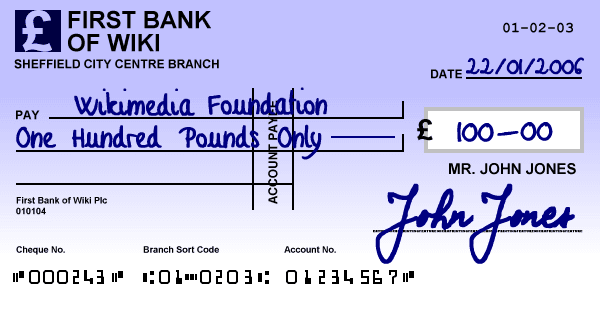
Measure cheque OCR accuracy by field
A useful benchmark reports each field separately. The question is not “what is the overall accuracy?” It is “which fields can be accepted automatically, which need review, and what happens when the system is wrong?”
| Field | Metric | What breaks | Control |
|---|---|---|---|
| Payee | Exact match + normalized match | Cursive, mixed case, company suffixes, hyphenation, titles | Review when the name is low-confidence or conflicts with a known payee |
| Date | Exact ISO date match | DD/MM vs MM/DD, handwritten digits, abbreviated months | Reject ambiguous dates or route to manual verification |
| CAR — courtesy amount | Exact numeric match after normalization | Commas, decimals, handwriting, currency symbols | Never silently accept a low-confidence amount |
| LAR — legal amount | Words-to-number match | Spelling variants, “and 00/100”, languages, crowded writing | Compare with CAR; route any disagreement |
| CAR/LAR agreement | Agreement flag accuracy | A correct read of one field can still hide a mismatch | Treat disagreement as an exception, not an average |
| MICR line | Routing, account, and cheque-number match | Print quality, skew, overlays, damaged characters | Reject or review invalid check-digit or low-confidence reads |
| Signature presence | Presence/region detection | Stamps, overlapping text, faint ink, initials | Do not claim identity verification; route evidence for review |
| Uncertain-read rate | Abstentions ÷ eligible fields | A system that guesses is worse than one that abstains | Review queue capacity should match the abstention rate |
| False accepts | Wrong values accepted without review ÷ accepted values | The highest-risk error; a single wrong amount can be costly | Set an explicit tolerance with risk and operations |
Design the sample set
- 100–300 de-identified cheques from the actual workflow, not only clean samples
- Printed and handwritten mixes, including cursive and block letters
- Multiple bank layouts and at least two languages if your operation sees them
- Clean, skewed, cropped, low-light, stamped, and overlapping images
- Amounts near approval thresholds and dates near the screening boundary
- A double-keyed ground truth set with a second reviewer for disagreements
- A holdout set that is not used to tune prompts, thresholds, or model choice
Measure false accepts separately from uncertain reads
A wrong amount accepted without review is worse than an amount the system flags as uncertain. Measure false accepts and abstentions separately. Do not let a vendor average them into a single accuracy percentage.
If the system cannot explain why a field is uncertain, or cannot show the source image and reviewer decision, it is not ready for a bank workflow.
Handwritten cheque OCR scorecard template
Copy this into your evaluation sheet and populate it from your own run. Keep the raw counts, not only percentages; small samples produce misleading rates.
| Field | Tested | Exact / normalized | Abstained | False accepts | Reviewer notes |
|---|---|---|---|---|---|
| Payee | — | — | — | — | — |
| Date | — | — | — | — | — |
| CAR (figures) | — | — | — | — | — |
| LAR (words) | — | — | — | — | — |
| CAR/LAR agreement | — | — | — | — | — |
| MICR line | — | — | — | — | — |
| Signature presence | — | — | — | — | — |
Template only. Chequedb is not publishing a performance claim from this page; the numbers must come from your de-identified test set and agreed acceptance criteria.
Cursive payee names
Company suffixes, middle initials, and mixed print/cursive writing are common failure points. Test known payees and unseen names separately.
Amount words vs figures
A system can read both fields correctly and still miss that they disagree. Measure the agreement flag as its own field.
Date ambiguity
Handwritten 02/03 can be 2 March or 3 February. A system that silently picks one is not audit-ready.
Image quality
Skew, shadows, stamps, staples, and phone-camera crops change accuracy. Include them in the test set, not a separate demo.
Overlapping text
Signatures, stamps, and pre-printed lines can collide with amount or payee fields. Check whether the model abstains or confabulates.
Language and layout
Cheque layouts and legal-amount phrasing vary by country. Test the languages and layouts your operation actually sees.
Run it before you buy
Bring 50–100 representative de-identified cheques to a pilot. Ask for per-field results, abstentions, false accepts, review time, and the exact path a failed field takes. If the vendor cannot show failures, the demo is not a benchmark.
Related pages
Handwritten cheque OCR: common questions
What is a handwritten cheque OCR benchmark?
What is a handwritten cheque OCR benchmark?
Why is one accuracy percentage not enough?
Why is one accuracy percentage not enough?
How many cheques should we test?
How many cheques should we test?
What is CAR/LAR agreement?
What is CAR/LAR agreement?
Should the benchmark use real cheque images?
Should the benchmark use real cheque images?
Can Chequedb run the benchmark for us?
Can Chequedb run the benchmark for us?
This page is an evaluation guide, not a performance claim. The specimen is a real cheque image for a fictional bank, used for illustration only. Use de-identified documents and your own acceptance criteria. Chequedb does not provide legal advice; confirm cheque handling rules with the relevant bank.